
About the Flowers
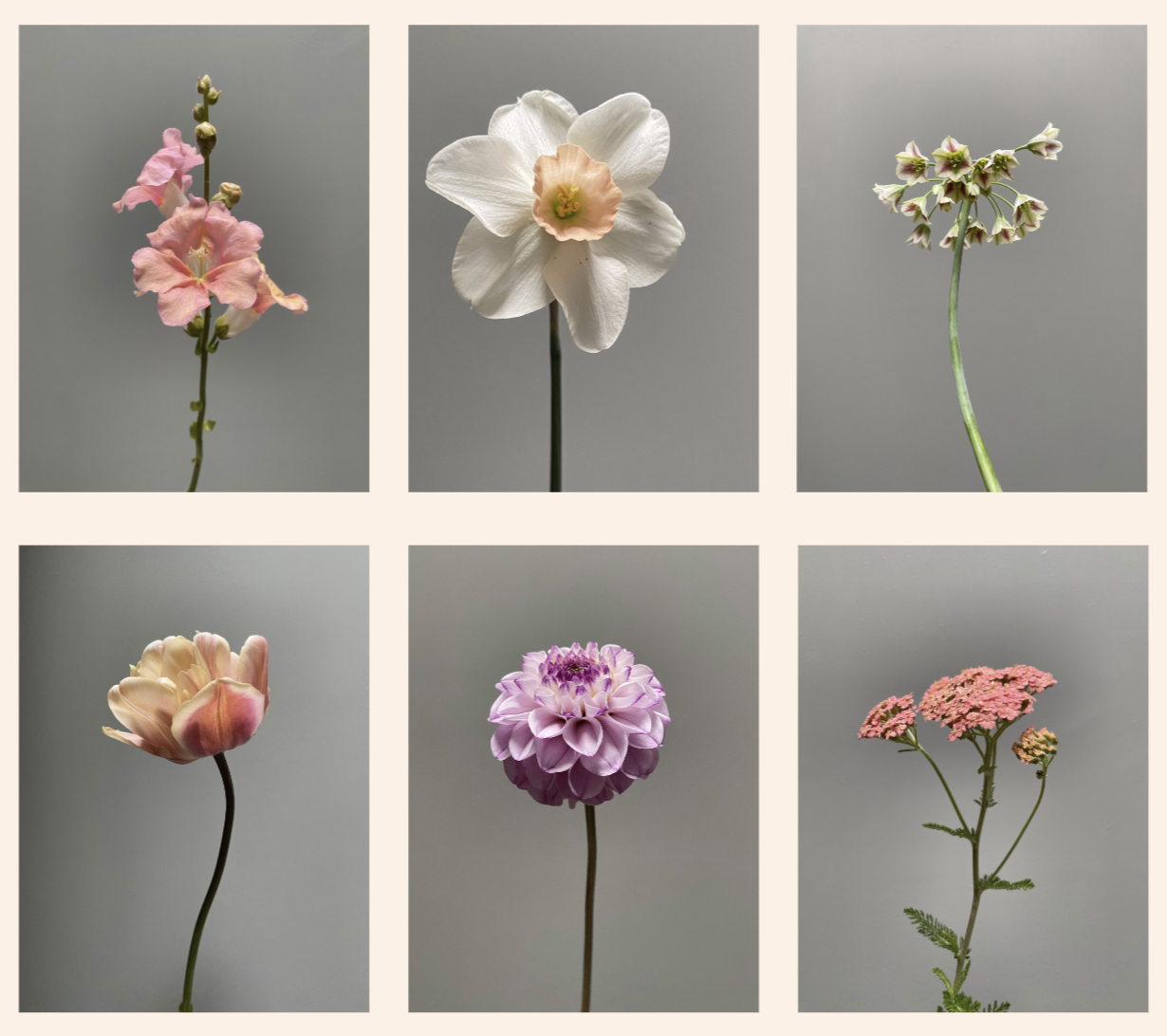
All of the flowers I use and sell are hand-nurtured and grown by me here on the Isles of Scilly. Every stem is rooted in place, shaped by the seasons and grown with care from seeds, bulbs, corms and tubers.
My seasonal flowers contain a mix of traditional favorites and beautiful new varieties through modern breeding. These include sweet peas, tulips, aquilegia, cornflowers, nigella, scabious, larkspur, ranunculus, sea holly, snapdragons, dahlias, cosmos, statice, strawflowers and zinnias, alongside a variety of grasses, chosen to add natural texture and movement. Many of my flowers are naturally scented, evoking childhood memories and are grown to celebrate the individual beauty of each flower.
I grow using the no-dig method in my cut flower beds, focusing on soil health through the use of peat free composts and mulches. I add my own homemade compost and worm castings. I am passionate about growing flowers without the use of harmful chemicals that damage soil life and wildlife. I collect and use rainwater as much as possible and use only natural pest controls. My flowers are net positive rather than carbon neutral, grown slowly and sustainably, without preservatives, artificial inputs or air miles.
Sustainability continues through every part of my work, including how my flowers are presented. Bouquets are wrapped in recyclable brown paper and tape, finished with reusable ribbon, rather than cellophane or plastic.
I hope you enjoy my flowers as much as I enjoy growing them.
Caring for your flowers
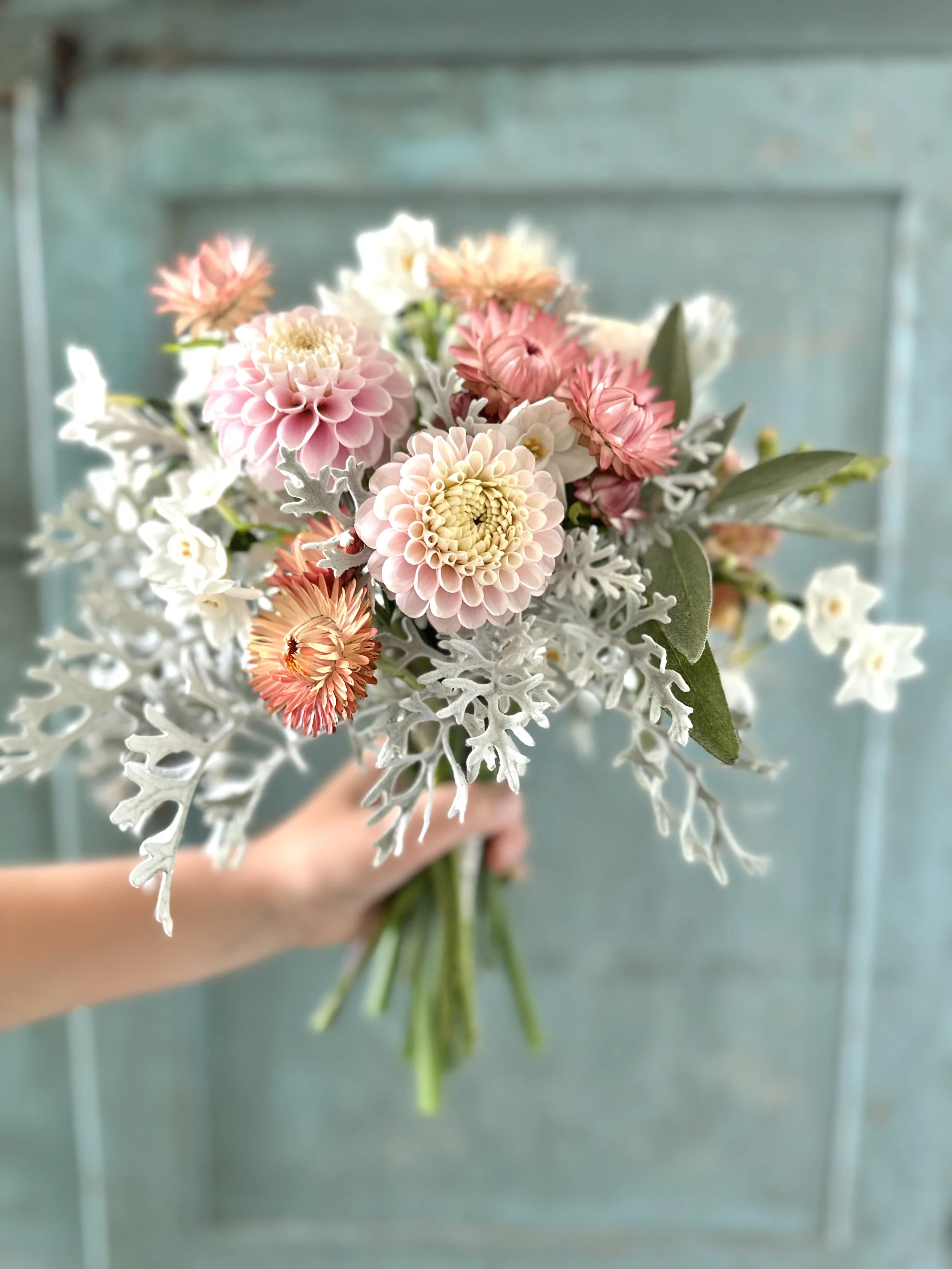
Your flowers will have been freshly picked and given a long drink overnight to get the longest vase life out of them.
To make the most of your flowers please use clean vessels filled with fresh water and give the stems a re-cut before you arrange them. Please do not leave your flowers out of water.
Place displays out of direct sunlight or heat sources if possible. Dried flowers will need to be kept dry.
Re-cutting stems and removing faded flowers will keep your flowers looking their best.
About me
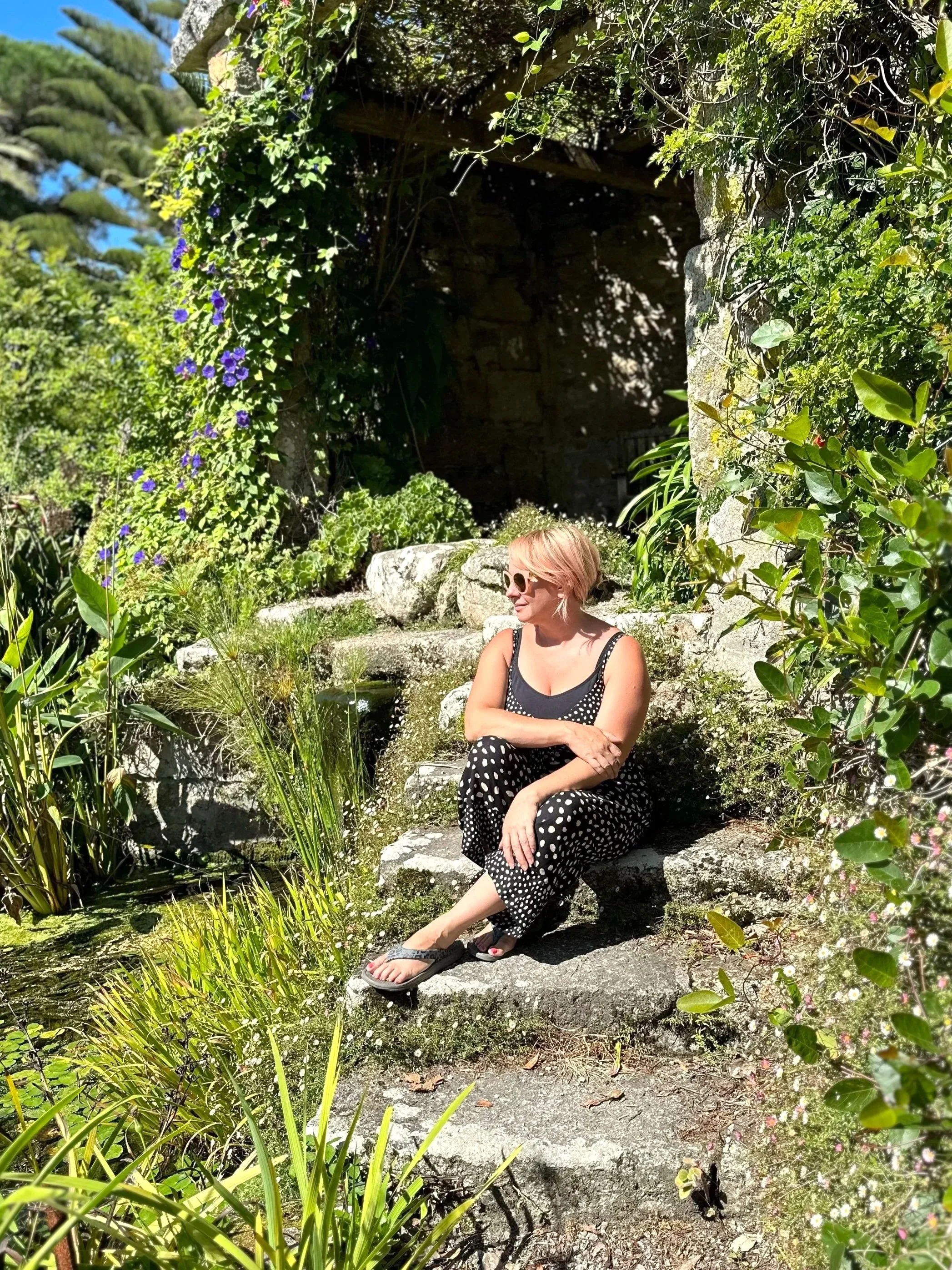
I’m Nicola – an obsessed flower grower with a lifelong love of flowers, nature and gardens. That love began in my childhood, where our family garden was my mum and dad’s oasis. Many weekends have been spent wandering garden centres or visiting charity open gardens, experiences that quietly shaped who I am today.
I later married a (then) landscape gardener, and together we fell in love with the good life. It was a special time raising our two boys, growing our own food and keeping chickens, pigs and sheep. We have always taken great pride in our gardens and smallholdings, creating wildflower meadows, orchards and wildlife-friendly habitats. Over the years, our awareness of the importance of sustainability and seasonality has grown ever stronger.
This deep connection to nature and a love of simple living led us to the Isles of Scilly, a place where we’ve shared beautiful family holidays and which has a close personal meaning to us.
Through Flowers from the Farm, which I have been a proud member of since 2021, I have met and been inspired by many other flower growers and florists. I’ve been fortunate to supply dahlia flowers for the RHS Wisley Flower Show and to represent Flowers from the Farm at Hampton Court Palace.
About Flowers from the Farm
Why British Flowers?
In short, because provenance matters.
Just as top chefs choose ingredients that are fresh, local, and in season to create the finest dishes, a new generation of florists and flower lovers are turning their attention to British-grown flowers for flowers.
At Flowers from the Farm, we believe in celebrating flowers with a story—flowers that reflect the land they were grown on, the care with which they were cultivated, and the communities they support.
Provenance
British flowers are rooted in place and time. Grown in the open air, shaped by local weather, and harvested in season, they reflect the rhythm of the natural world. Their wild, sometimes wonky stems and shifting colours are markers of the moment they were picked—and of the people who grew them with care.
Transparency
Do you ever give much thought to where your flowers come from? To how they were grown? And by whom? In a world of instant information, of being able to know which sheep in which field provided the wool for your jumper, of who’s hands packed your skincare product, transparency in the global supply chain of flowers is comparatively opaque. When you buy flowers from our members, you can know exactly where they came from and how they were grown. Many sell directly to florists or those people who will enjoy the flowers in their homes, building relationships based on trust and shared values.
Quality and Scent
Without lengthy supply chains, locally grown flowers retain the traits that make flowers magical—movement, character and fragrance. Their stems dance in the vase, their flowers open gradually over days, and their scent fills the air. It’s a sensory experience that reconnects people to the joy of real flowers.
Environment and Biodiversity
Our British flower farmers grow quality flowers, are socially responsible and are passionate about protecting the environment. Many grow their flowers using agroecological methods, supporting pollinators, enriching soil, and fostering biodiversity. Open-pollinated flowers contribute to healthy ecosystems, while field-grown flowers reflect and respect the seasons.
Hyper-local Economic Development
Every British bouquet supports local enterprise. From small-scale flower farms to local florists, flower growing is breathing new life into rural economies. The majority of Flowers from the Farm members grow on plots measured in acres rather than hectares—yet together, they’re transforming the cut flower industry. New wholesale hubs and direct-to-customer models are expanding access, while demand from florists is rising as more choose to align their practices with sustainable values.
The Future is British (and Seasonal)
In 2023, the UK spent £3.8 billion on cut flowers, yet only a tiny fraction of that was spent on locally grown stems. We’re working to change that. From tulips in spring to dahlias in autumn, there is a wealth of seasonal beauty to enjoy.
At Flowers from the Farm, we see flowers as more than decoration. They are a way to honour the land, support biodiversity, strengthen local economies, and connect people to the seasons and to each other.
Let’s grow a movement—stem by stem.